
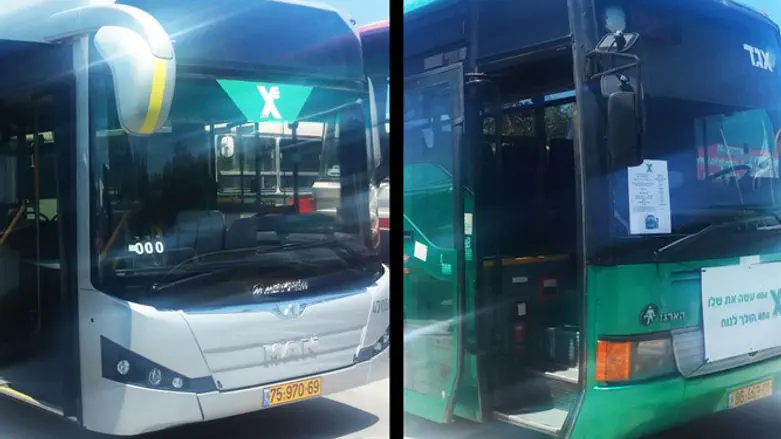
Following Egged's strike in the Jerusalem area on Wednesday, Israel's Transportation Ministry told Egged CEO Avi Friedman the company would receive a fine of more than 14 million NIS, for not running the lines and violating the conditions of the contract.
In addition, the Transportation Ministry summoned Egged management to a hearing over the drop in bus frequency and quality provided to passengers all over Israel. While the deterioration affected lines all over the country, it deteriorated most in the Jerusalem area.
In direct violation of Egged's contract, 6% of all lines did not run according to schedule, amounting to a total of 7.8 million canceled trips. In the Jerusalem area alone, Egged did not run 2.6 million bus trips, forcing the passengers to wait at the bus stop until the next bus arrived.
As a result, the Transportation Ministry has decided to cut 9 million NIS from the subsidies currently enjoyed by Egged, and to deduct an additional 50 million NIS for canceled trips around the country.
During the hearing, Egged admitted to not keeping to the requisite number of trips. The Transportation Ministry warned Egged that if the situation does not improve immediately, the Ministry will consider transferring the relevant lines to competing bus companies.
Egged spokesperson Ron Ratner said the strike was not Egged's initiative but rather something forced on them by the Jerusalem-area drivers, who locked Jerusalem's Central Bus Station. This forced intercity buses to drop their passengers off at the entrance to the city and return empty to their cities of origin, since picking up passengers was impossible.
"Egged's management turned to Israeli Police asking for help breaking into the Central Bus Station, so our substitute drivers could take their routes," Ratner said. "We call on all the striking drivers to return to work immediately and prevent further harm to Israel's passengers."
It is not clear how these fines and subsidy deductions will influence bus fares.