

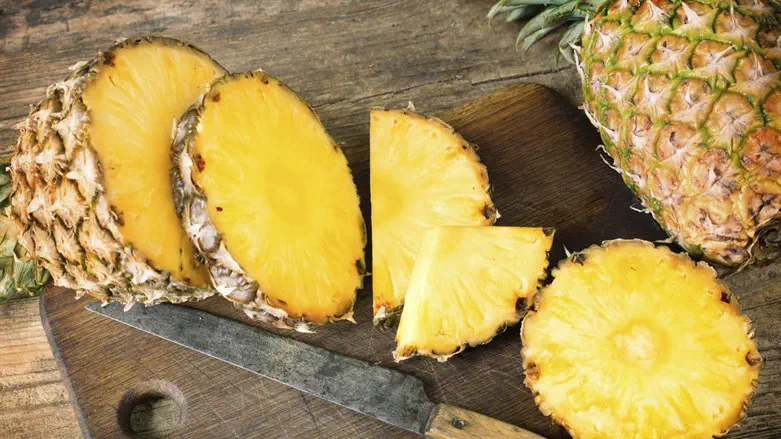
Today (Tuesday) is International Pineapple Day. Israel National News talked about the special fruit and its virtues with the clinical dietitian and agronomist Prof. Niva Shapira from Ashkelon Academic College.
Beyond the widespread love for the fruit's taste, the pineapple is a fruit with significant health benefits. Prof. Shapira points out that the sweetness and juiciness of the pineapple reduces its shelf life, and that eating it preserved reduces many of those benefits.
The many enzymes in the pineapple are designed to protect it from pests and spoilage. The enzymes accelerate protein breakdown processes, which is also beneficial to the person eating it, but also what makes the fruit effective for tenderizing meat. In fact, the decomposition procedure carried out by the enzymes is largely similar to gastric digestion, which protects both the fruit and those who eat it. That is why pineapple is included in many weight loss programs.
Prof. Shapira points out that despite the great sweetness of the pineapple, it does not raise blood sugar to the level we would expect it to, thanks to its high acidity. The fibers in a pineapple that hold the sugar and also add health benefits to it. The dietary fibers in pineapples protect the intestine, absorb and remove cholesterol, bile salts and other risk factors from the food, and contribute to a feeling of satiety and thus protect against obesity and the nutritional risks of the Western world.
In an article she has published on the subject, Shapira comments that "the pineapple extract contributes to reducing inflammatory processes in the body, to preventing hypercoagulability of the blood, and can even help prevent and slow down cancerous processes." About the vitamins in the fruit she writes: "Pineapple has a high content of various vitamins and minerals, which contribute greatly to the normal and healthy functioning of the human body. Pineapple has a high concentration of vitamin C, which is known as a leading antioxidant in an aqueous environment (10 mg in one serving of fruit). As a contributor to the efficiency of the immune system, resistance to stressful conditions, and a contributor to the renewal of vitamin E - which is an antioxidant that works in a fatty environment. Together they provide broad protection from the damage of free radicals that are created in the processes of ongoing metabolism and in conditions of stress and inflammation and can cause damage to the body and harm our health. Vitamin C is also necessary for the production of collagen, which is essential for the construction and regeneration of connective tissues - including bone and skin."
She also wrote that "Another mineral that is found in high amounts in pineapple is manganese. Manganese is active in antioxidant enzymes, chief among them super-oxy-dismutase, which is of great importance in activating the body's antioxidant defense system. Pineapple is also rich in vitamins critical to the proper functioning of the body, such as: vitamin B1 (thiamine) essential for carbohydrate and energy metabolism in the body, vitamin B6 essential for protein metabolism and communication hormones in the brain."