
Daniel Winston is a therapist and writer living in Northern Samaria, Israel and can be reached at DanielWinston.com.
There is a moment in the life of every utopian project when the theory meets the loading dock, and the theory loses. New York City reached that moment last week, at a podium, on camera, in front of the press.
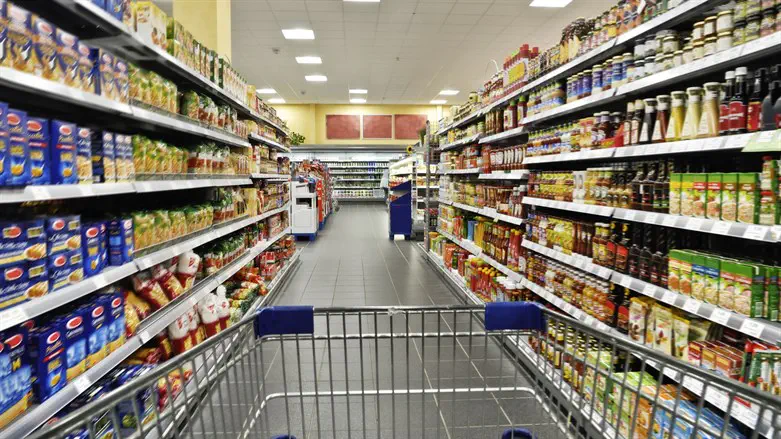
A reporter asked a boring operational question about Mayor Zohran Mamdani's municipal grocery stores. If the city is going to sell staples at thirty percent below market price, what stops an enterprising man from buying a pallet of discounted chicken and reselling it at a markup three blocks away? What stops half of Bergen County from driving over the bridge and clearing the shelves?
The mayor handed the microphone to Jeanny Pak, interim president of the city's Economic Development Corporation. Her answer deserves to be carved in stone above the entrance of every store the taxpayers are about to build. The city, she explained, wants to make sure it is targeting New Yorkers, "whether it be a sort of a library card-esque" arrangement, and to "manage who's buying."
Manage who's buying. Read that again slowly.
Somebody in that building worked very hard to avoid saying the word "ID." What they landed on was "library card-esque," which is the most beautifully bureaucratic phrase produced in New York since the Board of Estimate was abolished. It is an identity document that has been placed in a witness protection program. It has a new name, a new haircut, and a convoluted cover story.
The word they cannot say
Understand why the euphemism was necessary.
The Democratic Socialists of America, the organization that endorsed and elected this mayor, states on its own website that its candidates stand firm against racist voter ID laws. That is the position. Not that voter ID is unnecessary, or redundant, or a solution in search of a problem. The position is that requiring a human being to produce identification before exercising a civic function is racist.
For fifteen years American voters have been instructed that the photo ID sitting in their wallet is an artifact of privilege. That the poor cannot obtain one. That the elderly cannot obtain one. That minorities in particular face an insurmountable maze of documents and fees and offices with inconvenient hours. Every serious proposal to verify that the people choosing the president of the United States are in fact citizens of the United States has been met with the same liturgy, delivered at the same volume, by the same people.
Then those same people were handed something of their very own to protect. Not the presidency. Not the Senate. Not control of the Supreme Court for a generation. Discounted bananas.
And the ID requirement appeared within a single press conference.
Not after a study. Not after a commission. Not after a two-year stakeholder engagement process on equitable access. It appeared the instant a reporter pointed out that free money attracts people who want free money, and the administration realized, live and in color, that it needed a gate.
So let the record show what New York established last week. Requiring identification to select the leadership of the American republic is a civil rights emergency. Requiring identification to buy a subsidized cucumber is a smart administrative safeguard.
If a photo ID is so trivially obtainable that every working New Yorker can be expected to produce one for a discount on ground beef, then the suppression argument is dead. It has been dead for years. It was killed last week by its own authors, on their own stage, in defense of their own vegetables.
They did not choose this. Arithmetic did
Here is the part that matters more than the hypocrisy, and the part nobody in that room seems to have absorbed.
Nobody at that podium woke up that morning wanting to card shoppers. They were driven to it in real time, in public, by the internal logic of what they had built. That is the whole lesson, and it is free - courtesy of people who aspire to give away free stuff.
When you sell a good below its cost, you have not lowered the cost. You have moved it. The thirty percent does not come from superior management or the elimination of greed. It comes from free city land, no rent, and no property tax, which is to say it comes from the people of New York, who will pay it in their tax bill instead of at the register. The administration has not invented cheap food. It has printed a receipt that lies, cheats, and steals.
And the moment the price on the shelf stops telling the truth about the good behind it, you have created an arbitrage. Somebody will work it because somebody lways works it. That is not a slander against the poor, it is a compliment to human intelligence. A thirty percent spread on staples in a city of eight and a half million people is an invitation to do business, and it will be run by people far more motivated than the Economic Development Corporation.
Which means the city now needs to control who enters. Then it will need to control how much they take, because the residency card stops the man from New Jersey but does nothing to stop the man from Hunts Point who buys forty pounds of chicken every morning. So there will be quantity limits. Then a purchase history, because limits without records are decorative. Then a card that gets flagged, then a card that gets suspended, then an appeals process for New Yorkers who have been administratively separated from the meat aisle.
None of that is a conspiracy theory. It is just what rationing requires, and rationing is what price control produces. Every government that has ever fixed a price has discovered this, usually in the same order, usually while insisting it was temporary.
The race
Meanwhile there is a competition underway that nobody entered voluntarily.
The bodegas and neighborhood markets of New York City operate on margins under five percent. They are now piously and pompously told not to worry, because the city stores will not carry cigarettes, alcohol, lottery tickets, or hot food, and there will therefore be room for everyone. This is offered as reassurance. It amounts to telling a grocer he may keep the scratch-offs while the city takes the milk, the eggs, the bread, the produce, and the meat, at thirty percent off, with no rent and no property tax, forever.
Some in the mayor's own movement have not bothered with the reassurance at all. If the bodegas cannot survive the competition, their argument goes, perhaps they should not have been in business. Tell that to the man who has been open at five in the morning on Fordham Road for twenty-two years and knows every child on the block by name.
So the race is on, and there are only two ways it ends.
The bodegas break first, undercut by a competitor that does not need to make money and cannot be allowed to fail. The neighborhood loses its private grocery infrastructure, the redundancy that made the food supply resilient, and the only remaining source of eggs is a single 20,000 square foot municipal store whose operator was chosen by a request for proposals.
Or the city stores break first, hollowed out by shoplifting which cannot be prosecuted by a system rooted in equity, by smart resellers working the card system, by shelves that empty faster than a bureaucracy can reorder, and by the ordinary mismanagement that attends every enterprise where nobody's own money is at risk.
The second failure is survivable. The first one is not, because once the bodegas are gone they do not come back, and then the city store is not a competitor. It is the food supply. And a food supply that answers to a budget line rather than to customers is a food supply that can be defunded, restructured, reorganized, or simply run badly by the next administration until it is run into the ground.
Utopia, with a cheese line
Picture the end of it, because it has a shape and the shape is familiar.
A neighborhood with no private grocer left standing, a municipal store with bare shelves and a line out the door, a sweaty mayor explaining that the shortage is the fault of hoarders and profiteers and speculators and Trump, and eventually a request for state and federal help to set up distribution points where New Yorkers can receive free cheese, peanut butter, and canned beans from the back of a truck.
Government cheese. The predictable final form of the affordability agenda.
New Yorkers voted for this. They were told exactly what was coming, by a candidate who did not hide it, and they chose it, and they are going to get it. All of it:
The discount, the shortage, the card, the queue, and the man at the produce section asking to see your papers before he lets you touch the tax-subsidized fruit.
They wanted a government that would take care of them. They are about to learn the difference between being taken care of and being managed.
Manage who's buying. Carve it in stone.