

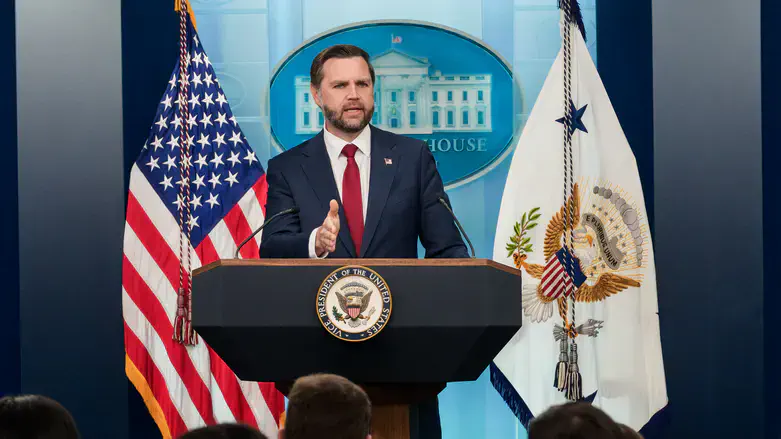
US Vice President JD Vance said Monday that the conflict between the United States and Iran is expected to enter a “much different phase in a couple of months," while agreeing with President Donald Trump that the war could conclude shortly after the November midterm elections.
In an exclusive interview with The New York Post aboard Air Force Two, Vance said Iran's control over the Strait of Hormuz would continue to weaken ahead of the elections. He noted that commercial traffic through the strategic waterway has now recovered to “well over 50% of normal traffic."
“We can’t predict the future, but I think the president is right to say that this thing will enter a much different phase in a couple of months," Vance said. “He’s also the commander in chief, so he’s the person who determines … when conflicts start and when they stop."
“I certainly understand there’s some impatience from the American people, but fundamentally what’s happening right now is that the United States is not engaged in aggressive operations. We’re just not," he added.
“But what is happening is that the Iranians are occasionally shooting at commercial shipping, usually not successfully," Vance said.
US Navy SEALs have cleared mines from large portions of the strait over the past four months, although shipping remains well below its pre-war level. The United States has significantly reduced Iran's missile and drone capabilities, while Tehran continues to intermittently target commercial vessels in the strait and American military positions across the Middle East. Gulf states have also come under attack, with Trump recently suggesting that Iranian drones were responsible for damage to Saudi Arabia's East-West oil pipeline.
Washington has also targeted Iranian oil tankers and imposed Treasury sanctions on banks and other entities accused of financially supporting Iran's war effort.
“There are really two phases to this thing, and the first phase is done," Vance continued. “The first phase was destroy the nuclear program, destroy their conventional military, destroy their ability to project power in a way that they were able to even a couple of years ago."
“And then the second phase of this is ensure that they’re not able to rebuild and try to maintain as much global stability in the wake of that," he also said.
Vance was the architect of a Memorandum of Understanding reached between Washington and Tehran in mid-June that established a ceasefire and launched negotiations over Iran's nuclear program and an end to the conflict.
It remains uncertain whether Trump will intensify military action after the midterm elections or whether Iran will become more willing to reach an agreement with Washington.
Vance's remarks came days after Trump predicted that the conflict would end immediately after the November midterm elections, arguing that Iran “can't hold out any longer." Trump also accused Tehran of prolonging the conflict in an attempt to influence the elections.
“They're desperate to try and affect the election so that we could get a nice, weak group of people in there and leave them alone and let them have their nuclear weapon."
Trump said Monday that Iran is seeking an agreement with Washington and indicated that the United States remains open to negotiations, although he said he would make the final decision on whether to engage.
“The failing Nation of Iran wants to make a deal, quickly and badly," Trump wrote on Truth Social. “I will determine whether or not the U.S.A. will choose to engage - the concept of which we are open to."