
Parshat Tazria-Metzora:
What is the true core of the Torah?
Lessons from the Torah portions of Tazria and Metzora, the exact middle of the Torah, and how all three connect to the days of the Omer.
Lessons from the Torah portions of Tazria and Metzora, the exact middle of the Torah, and how all three connect to the days of the Omer.
This week’s message deals with military conscription - in the United States of America...

Why does the Torah not require covering the blood after slaughter for cattle, sheep, and goats?
The Pesach sacrifice was a massive act of defiance against the idolatrous Egyptian oppressors. And the Haftarah-reading for Shabbat Hagadol is the very last prophetic vision ever.

When, chronologically, did our Parashah's first verses occur?
The essential task is not only behavioral correction, but internal scrutiny.
Shabbat Hagadol, prior to the holiday of our freedom, reaffirms our identity as the Jewish nation. Shabbat Shuva reaffirms our identity as a God-centered people. In their land.
It is precisely at the threshold between message and moment, that this special Haftorah’s relevance to our own time becomes unmistakable.
Why did God command that we bring korbanot (Temple offerings)? What is the purpose of this form of serving God?
Korbanot (0fferings), the Mincha, and the Avodah of Vayikra.
Is there any organic connection between Parashat Vayikra, Nissan, and Purim?

The korbanot in the Bet Mikdash - assuredly they were to unite worlds.
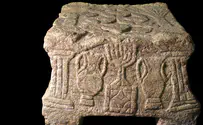
Those who give their lives for the Jewish people-the קדושים-occupy a place in heaven that no other creature can reach.

Realizing that we exist as the handiwork of our Maker must be at the forefront of our consciousness. This awareness keeps us humble and guards us from sin.

Just as the Mishkan could only stand because every contribution was counted, so too the Jewish people grow strong when each person gives what they can, according to their abilities.
Rabbeinu Bachye explains, the very question is the answer-the Beit HaMikdash, and its predecessor, the Mishkan in the desert, was not merely a physical building; it was the repository of the collective psyche and soul of Am Yisrael, which allowed Hashem’s Shechinah to be more manifest in this physical and troubled world.

Gathering together, making sure all are accounted for, and planning ahead: this week's Torah readings parallel Israeli citizenry's response to the ubiquitous sirens that send us all to our shelters.
To host G-d, you must make space in your heart.

It wasn't just the work itself that was done as Hashem commanded, it was also the way it was done.
The Mishkan is here to remind us of that. Hashem has brought presence to Space. Parashat Hachodesh tells us that this presence occurs in time.
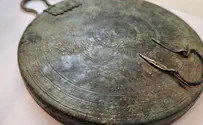
The mirrors ussd for the Mishkan had an exotic histtory.
The fact that Hashem performs miracles does not release us from responsibility. On the contrary, it obligates us even more to act with seriousness and commitment.
What did our Sages mean when they said that the Mem and the Samekh in the Luchot stood miraculously?
We must remember the central place that the crime of idol worship occupies in Judaism.
These special clothes indicate that the kohanim suffer from a fundamental dissonance.
“Remember what Amalek did to you on the way, after you left Egypt… you shall blot out the memory of Amalek from under heaven; do not forget."
What is the Torah's attitude toward clothing? Is there anything wrong with trying to look one’s best and constantly keeping up with the latest style?
Haman and Amalek represent the force that brings death and destruction into the world. Mordechai - connected to the Ketoret- represents the force that stops death and destruction.

There are many similarities between the return to Zion at the time of Ezra and today’s return to Zion.
![When the majority of Jews [dwell] in their Land...](https://2.a7.org/files/pictures/203x125/1055955.jpg?autocrop=1 "צילום: אייסטוק")
The most powerful image is one that stands for our facing one another.

What is the significance of this unique animal, the Tachash? How are they like the Erev Rav?
Through their deeds, which are pleasing before Him, the righteous themselves become the concrete sanctuary of Hashem.
The construction of the Mikdash/Mishkan/Tent of Meeting transformed us from a collection of families to a united nation, united in in our worship of G-d.
What is the meaning of the idea that G-d “dwells among us?" And why is the Mishkan built of donated materials, instead of G-d commanding the Jews to bring them?
What purpose did the Table serve and what need was there in the Sanctuary and in the Temple, that required a Table?

Our synagogues, like the Temple, must be a Beit Midrash, a Beit Tefilah and a Beit Kenesset.

‘If you accept the ordinances, there will be peace amongst you, and you will then merit to acquire the Torah.’
Young religious Zionist Torah scholars connect the Torah Reading with the Land of Israel.

“The progress of human knowledge, and all of the results of human inventions - is all the work of God."
The Iranians are suffering from obsessive, compulsive hatred of the Jews and of Israel and do not hide their intention of using any and every means to eradicate the lives of 8 million Jews in Israel. Is it wise to wait and see?!

What is the difference between a G-d Who listens and a G-d Who partners?
Parshat Shekalim itself revolves around the half-shekel - a modest, equal contribution required of every individual, rich and poor alike, toward the communal service.
This Shabbat, in addition to reading the parsha of Mishpatim, we will read the haftarah for Shekalim.

We cannot undo what has been lost. We cannot remove the pain from the bereaved. But we are commanded not to add to it.
Does this commandment have any practical application, as do the other commandments of the parashah?
Thank God, we merit to see more and more people returning to tradition, and the day is not far when the entire people will return to its roots, and through this we will be fruitful and multiply from within - and from without, through a great aliyah.

We have two different opinions as to when Yitro joined, and Zipporah rejoined, the Children of Israel: shortly before the Giving of the Torah, or shortly after it.
The crucial difference between Marah and Sinai.
G-d will tolerate many things from His servants. Becoming a prosecutor of Israel is not one of them.

The Torah records Yitro’s actions because they contain important lessons for all of us.

One can see in Seudat Yitro, celebrated by Tunisian Jews on the Thursday before Shabbat Parashat Yitro, an invitation to reconsider the boundaries of belonging and the possibility of lending an ear to wisdom that comes from outside.

Jewish life has evolved into a kaleidoscope of concepts, values, commentaries, hopes, halakhic decisions, conflicts, etc., where everyone is so sure of himself, but no one really has it right.
Why does Jewish Law oppose men listening to a female singer? And why, then, did Miriam and the Israelite women sing at the Red Sea?

Let’s listen to what our children say. Often, they just comment on things. They say sweet nothings. But sometimes there’s something really perceptive. Like Miriam.
The Prophetess Devora asks the tribes who did not join the fight against Sisera's forces when Israel was under threat, where were you? This is the question that many in Israel must now confront honestly. And it has nothing to do with the fact that the Israelites won without those tribes.
My sense is that many contemporary Jews, especially those who would identify as “liberal," might not be entirely comfortable with Moses' Song of the Sea. It is not in sync with a mindset that views war as an evil that “never solves anything." What is Judaism's view?

You fight-but not with fear. You fight with trust, knowing that the outcome is in His hands alone.
Why did Hashem cause the Israelites to worry about lack of water, and - further - bring them to a place of bitter waters?

Joseph's bones were taken with the Jews when they left Egypt, the start of a tradition that we do not move on without our heroes. And Ran Gvili, who parallels the martyrs of Beitar, will be buried with dignity.
God is looking for something else entirely. Opinion.
